Greater Manchester is known as the birthplace of the Industrial Revolution, and it remains one of the most innovative engineering and manufacturing regions in the UK today.
So, when the Greater Manchester Chamber of Commerce (GMCC) Manufacturing & Engineering Forum brings leaders together, it provides a platform for shaping the future of Engineering education.
Antony Grace Joins the Panel as an Industry Voice
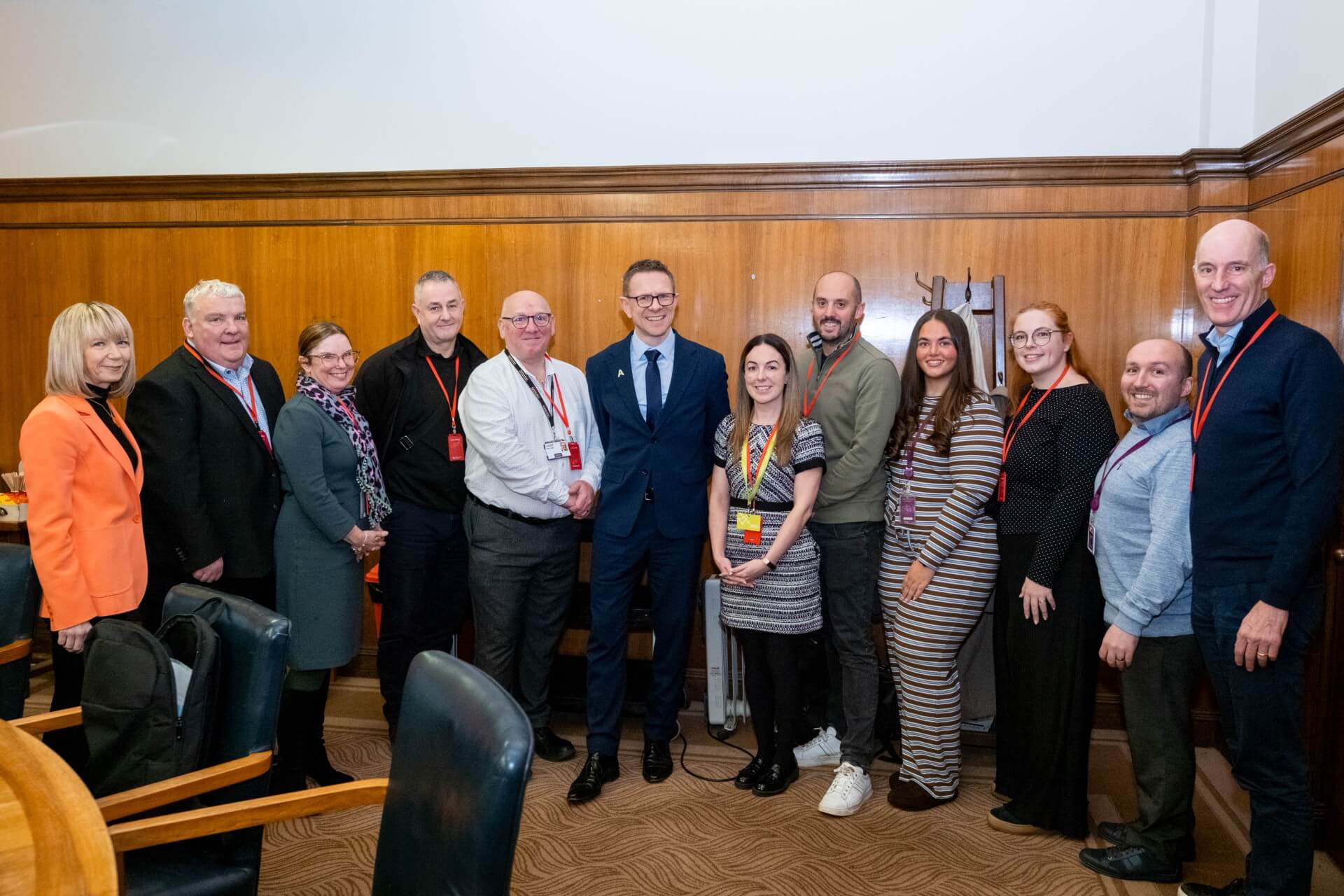
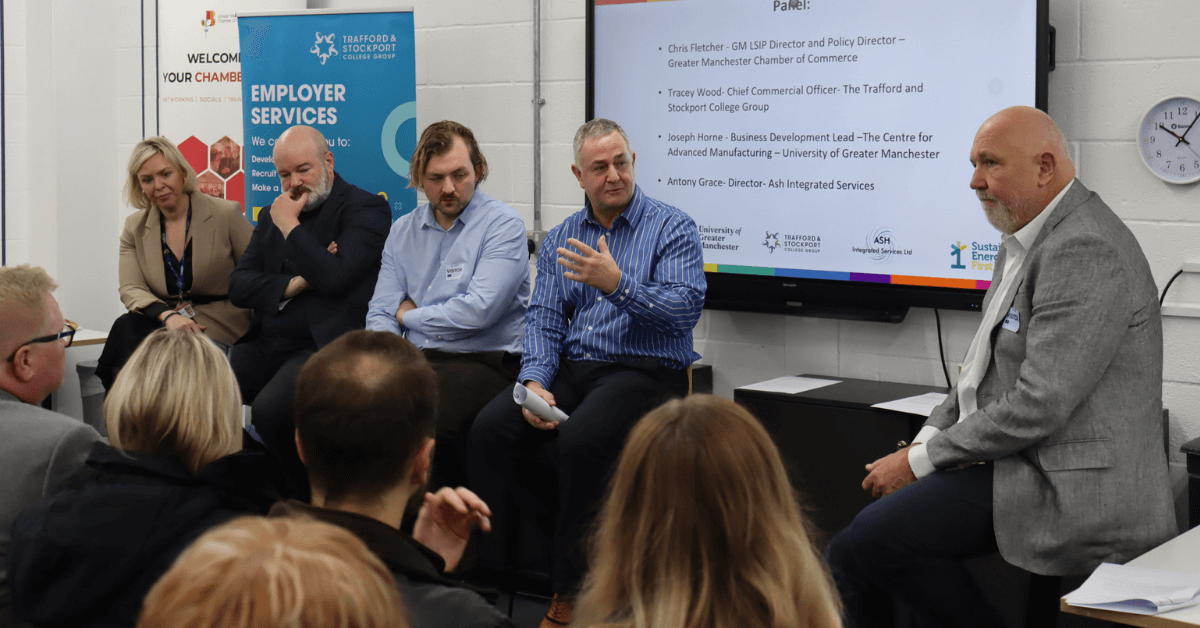
ASH Integrated Services Director, Antony Grace, joined the most recent panel hosted by Wayne Jones OBE, alongside leaders from industry, academia, and policy.
Antony took part in his capacity as a member of the Manchester College Stakeholder Advisory Board for Technical, Manufacturing and Construction. This role enables him to contribute directly to curriculum design and future skills planning.
More importantly, his insight as an employer added genuine value. Antony answered questions from the audience honestly and practically, drawing on lived experience as a business owner who hires, trains, and develops mechanical and electrical engineering talent.
Shaping What Engineering Needs Today — and Tomorrow
The forum encourages forward-thinking discussion about what the sector needs now, and what it will need in the years ahead.
With Greater Manchester boasting the largest manufacturing base in the UK, the focus is firmly on strengthening innovation, sustainability, and talent development.
A major theme of the panel centred on the alignment between industry and education: what employers actually need, and how colleges can adapt their programmes to produce work-ready students.
Antony emphasised that engineering cannot be taught in isolation.
Skills need to be grounded in real-world application, hands-on learning, and ongoing collaboration between training providers and businesses.
Closing the Gap Between Job Descriptions and Reality
Audience members shared their own recruitment experiences, explaining that job descriptions often didn’t match the actual role.
Larger employers typically rely on HR-led interviews, where the technical detail isn’t fully understood.
Antony highlighted a simple but powerful solution: involve existing engineers in the recruitment process.
When someone who does the job sits in the interview, expectations become aligned and conversations become more accurate.
Smaller companies already take this approach because they don’t have large HR departments, and it works.
Students Need More Than Theory
Students frequently leave education with qualifications but lack practical readiness. To address this, Antony called for earlier industry exposure, meaningful work experience, and a curriculum that adapts to the rapidly evolving landscape.
Skills in areas such as renewable technologies, electrical infrastructure, HVAC systems, building security, data connectivity, cyber-safe systems, and sustainability-led engineering must feature prominently in modern training.
Speaking from both corporate and personal experience, Antony said:
“Colleges can’t guess what businesses need; they need industry telling them directly. That’s why forums like this matter.
If we want young people ready for the workforce, employers have a responsibility to help shape what they’re being taught.”
A Sector in Transition — and Under Pressure
The conversation naturally expanded into the wider skills landscape. Antony pointed out the impact of an ageing workforce.
Many highly skilled engineers are approaching retirement, taking decades of practical knowledge with them. That experience cannot be replaced instantly by qualifications.
At the same time, the industry is transforming. Smart systems, low-carbon technologies, digital integration, AI-supported building management, and renewable infrastructure are becoming standard.
Engineers aged 30–50 often find themselves caught between traditional and modern engineering but lack access to training that helps them bridge the gap.
Recruitment remains difficult too.
Roles such as electrical engineers, mechanical supervisors, building services specialists and BMS technicians are consistently hard to fill, creating a bottleneck at a time when we need skills to flow freely across generations.
ASH’s Role in Strengthening the Talent Pipeline
For ASH, this work forms part of a much bigger mission.
We actively support the regional talent pipeline.
With eight apprentices in training, more joining this year, and a strong presence in local schools and colleges, ASH remains committed to growing future engineers from within the communities we serve.
But as the industry evolves, our responsibility evolves with it.
Younger candidates entering the profession need strong mentorship, and mid-career engineers need access to re-skilling and cross-training to stay relevant in a modern landscape.
Funding to support this kind of development is not always easy to secure, and that remains another challenge for smaller companies.
A Collaborative Path Forward for Greater Manchester
Greater Manchester has an opportunity to lead the way in engineering excellence.
But, only if employers stay engaged, colleges remain agile, and students receive a clear, supported pathway into meaningful work.
ASH will continue contributing to this shared mission through advisory roles, school outreach, partnerships, and real-world expertise.
Our focus is simple: ensuring engineering education in Greater Manchester remains relevant, responsive, and ready for the future.